
Introduction
Evidence-driven assurance framework delivering Operational Truth™ through Test-Management-as-Code (TMaC) for quality, security, reliability, and compliance.
Qualityfolio, which delivers Operational Truth with Test-Management-as-Code (TMaC), is an evidence-driven assurance framework designed to bring structure, transparency, and governance to the entire testing and compliance lifecycle. It aligns quality engineering, security validation, site reliability practices, and compliance requirements into a single, repeatable operating model.
Qualityfolio supports both User Acceptance Testing (UAT) for validating deterministic, application-centric behavior and Operational Acceptance Testing (OAT) for validating real-world system performance, reliability, and trustworthiness, especially in AI-driven and probabilistic systems.
Unlike traditional test management tools, Qualityfolio treats tests, execution steps, and evidence as version-controlled assets, enabling true auditability, operational validation, and continuous improvement.
What is Qualityfolio?
Qualityfolio is a unified framework that helps organizations design, execute, and govern their quality processes with a strong focus on evidence and traceability. It enables teams to validate both correctness against specifications (UAT) and fitness for real-world operation (OAT).
It connects the work of:
- Quality Assurance (QA)
- Security Engineering
- Site Reliability Engineering (SRE)
- DevOps and Platform teams
- Compliance and Audit functions
Key capabilities include:
- Markdown-first test design – Write human-readable, developer-friendly test cases in simple Markdown that live alongside your code, supporting both UAT and OAT scenarios.
- Runbook-based execution – Standardize execution using structured operational runbooks for repeatability, consistency, and real-world validation.
- SQL-backed evidence storage – Store test results, artifacts, logs, AI outputs, and proof in a structured, queryable evidence store.
- Git-native versioning and auditability – Track every change through Git, enabling full change history, audit trails, and traceability across both deterministic and operational validations.
Qualityfolio is fully integrated with Surveilr, enabling:
- Real-time dashboards and test health visibility
- Compliance and control coverage analytics
- Continuous audit readiness with live evidence
- Visibility into both functional correctness and operational performance
Who Uses Qualityfolio?
Qualityfolio is designed for cross-functional teams, including:
- QA & Test Engineers – To design structured test strategies covering both deterministic validations (UAT) and operational scenarios (OAT).
- SRE & DevOps Teams – To validate system reliability, resilience, and real-world operational readiness using OAT.
- Security Engineers – To manage security test cases, threat validations, and control verification across both UAT and OAT contexts.
- Audit & Compliance Teams – To access real-time evidence and traceability for regulatory requirements, including operational validation evidence.
- Product and Quality Leaders – To gain visibility into quality posture, operational risk exposure, and delivery readiness.
Core Benefits
Organizations using Qualityfolio gain significant operational and governance advantages:
- End-to-end traceability – Every requirement, test, execution, and evidence artifact is linked and traceable across both UAT and OAT layers.
- Code-reviewable test artifacts – Tests live as code, enabling peer review, approvals, and collaboration.
- Unified deterministic and operational testing – A single framework to manage both specification-based validation (UAT) and real-world operational validation (OAT).
- Structured evidence model – A standardized, queryable approach to storing logs, screenshots, system outputs, AI responses, and proofs.
- Continuous governance and compliance – Always-on control validation with continuous policy and regulatory alignment across functional and operational dimensions.
- Improved operational confidence – Validate not just correctness, but reliability, trust, and performance in real-world conditions.
How Qualityfolio Works?
- Define tests in Markdown aligned to requirements and controls, clearly distinguishing between UAT and OAT scenarios.
- Execute tests using standardized operational runbooks tailored for deterministic and real-world conditions.
- Capture structured evidence automatically during execution, including system outputs and AI-driven responses.
- Store all results in SQL-backed evidence repositories.
- Version and audit all changes through Git.
- Visualize quality, compliance posture, and operational reliability using Surveilr dashboards.
Getting Started
Start by installing Qualityfolio, connecting your source repository, and creating your first Markdown-based test artifact. Define both UAT (for deterministic validation) and OAT (for operational validation) scenarios to build a comprehensive, evidence-driven quality strategy.
Follow the setup guides to begin validating not just software features, but real-world operational behavior across your organization.
Platform Walkthrough
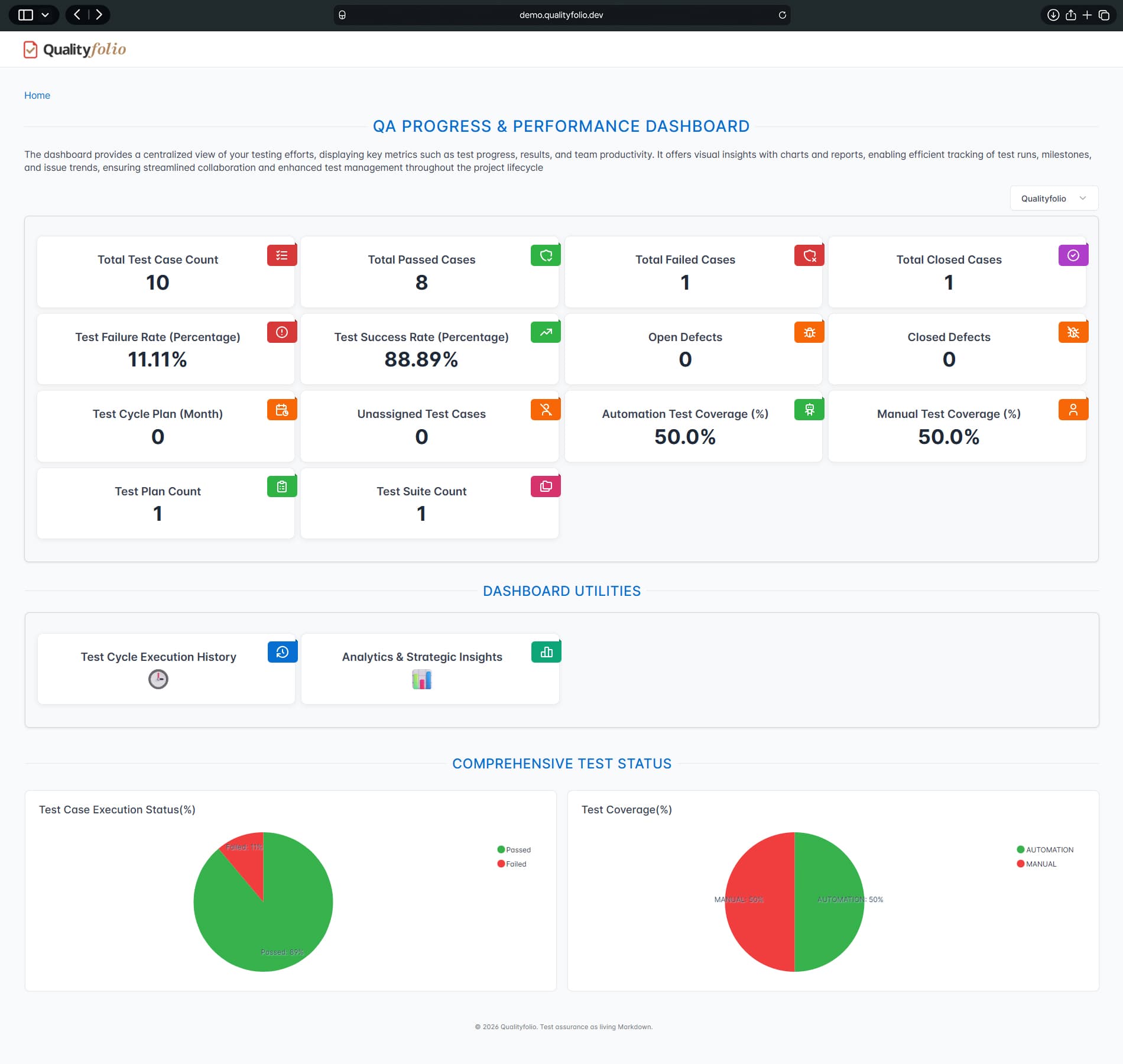
📊 Dashboard Overview
Get a comprehensive, high-level summary of test execution status, metrics, and your overall quality posture across all active projects at a glance.
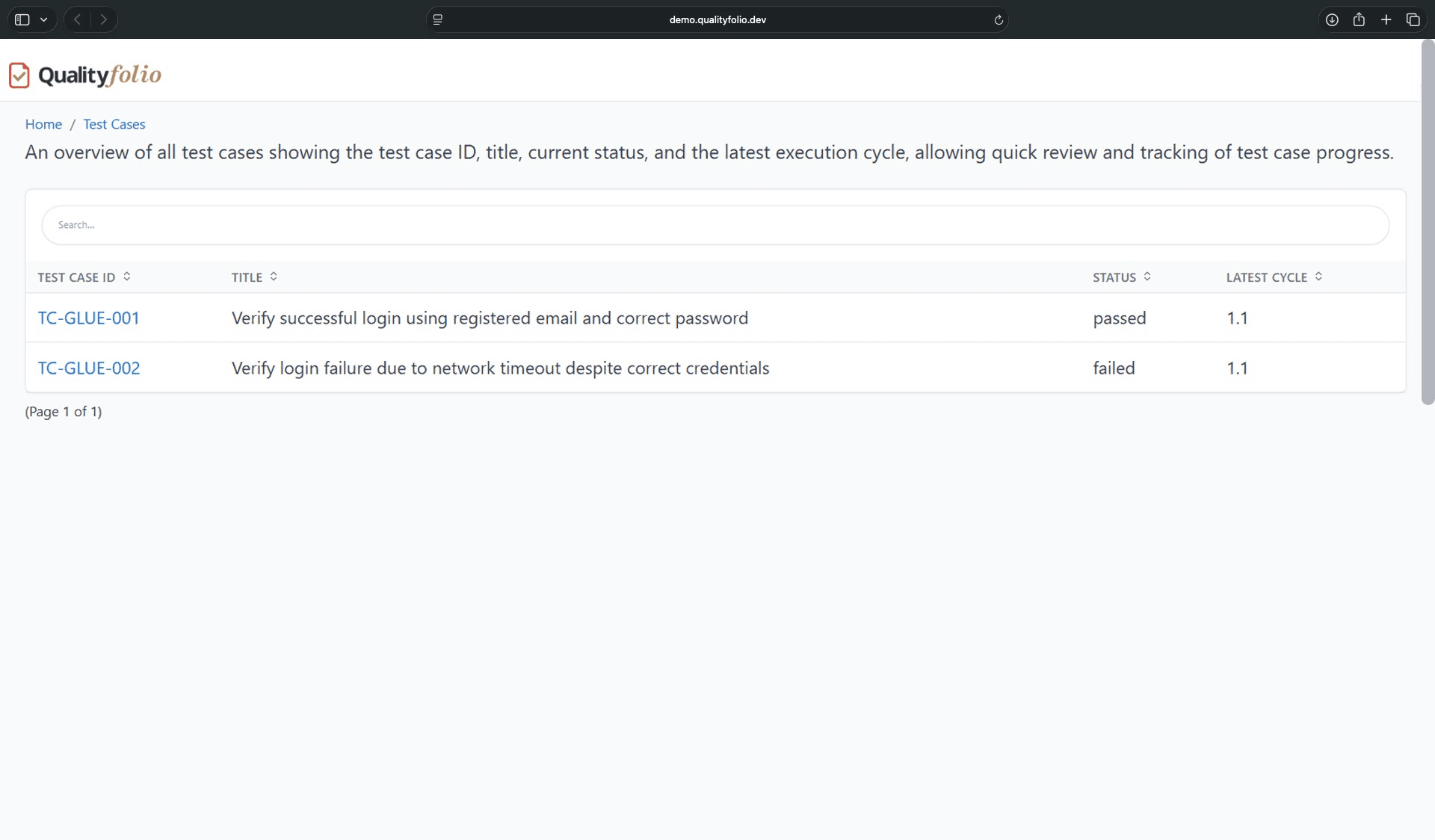
🔍 Detailed Test Case Drill-Down
Investigate individual test cases to view specific execution details, historical performance trends, and associated requirements for deep-dive analysis.
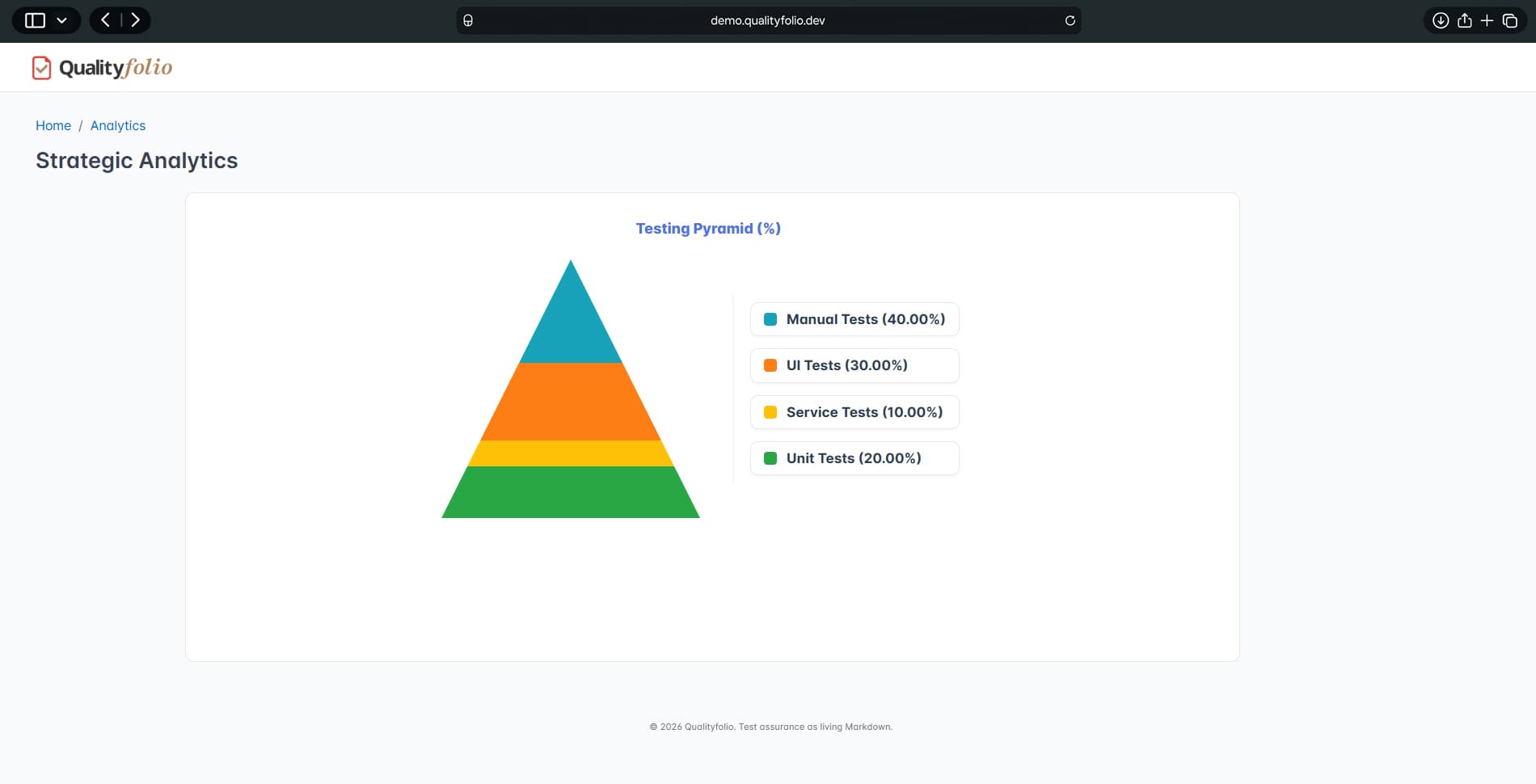
🔺 Strategic Analytics: Testing Pyramid
Visualize the distribution of your tests across different architectural layers, helping to ensure a balanced, efficient, and highly effective testing strategy.
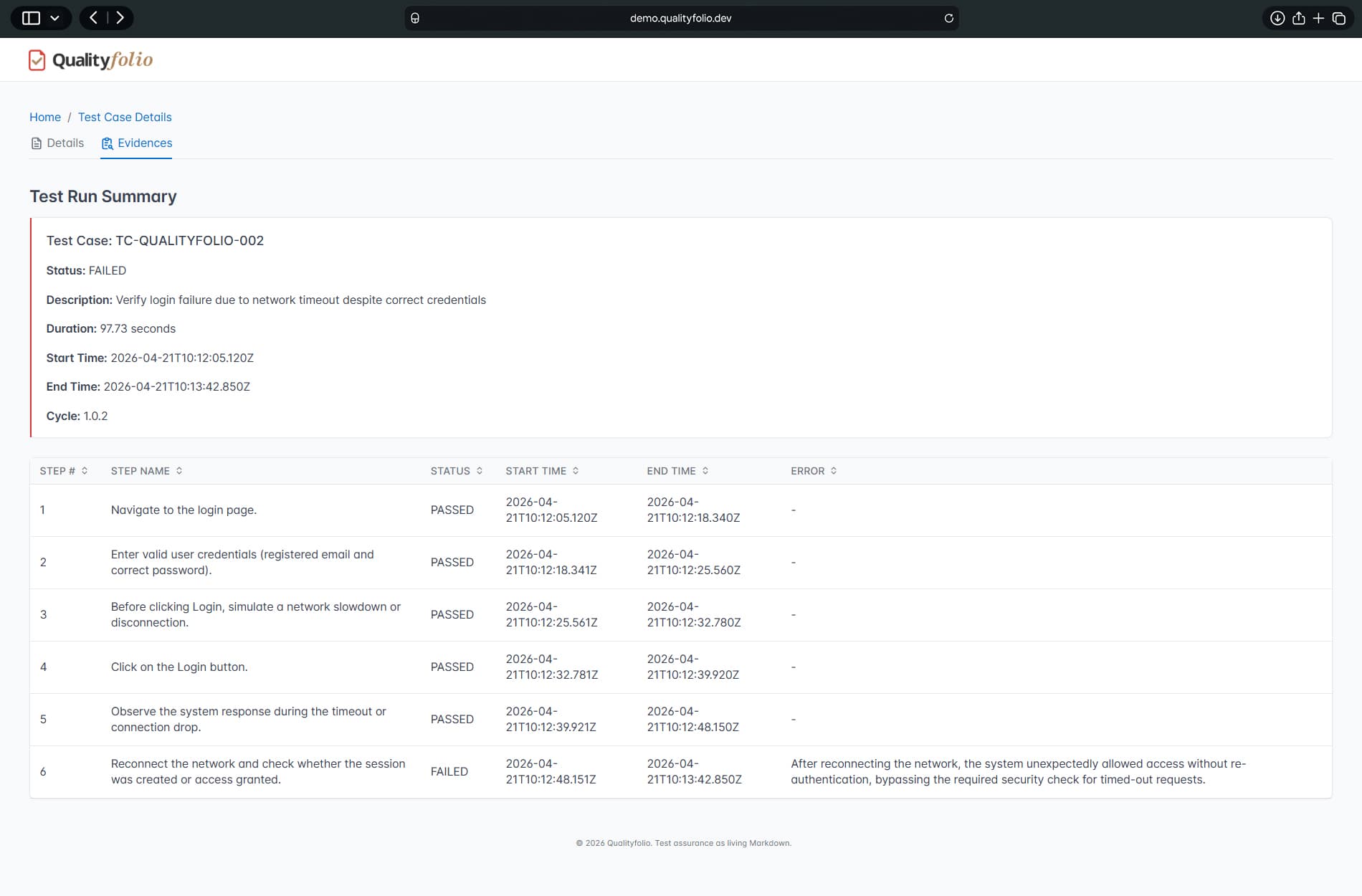
🧾 Verifiable Execution Evidences
Access and review structured execution evidence—including logs, screenshots, and raw system outputs—to definitively verify test outcomes and maintain an ironclad audit trail.
How is this guide?
Last updated on